
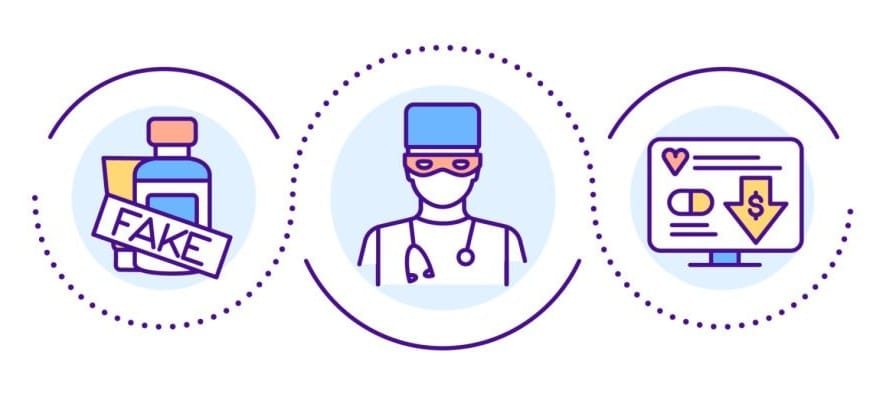
If a health product or treatment promises a quick and easy fix, it’s worth taking a closer look. Scammers often target people who are dealing with health concerns, offering products and services that appear legitimate but deliver little or no benefit.
The most common health scams include:
- Miracle cures that claim to treat or cure serious medical conditions quickly and easily.
- Weight-loss schemes promising dramatic results with little or no effort.
- Fake online pharmacies selling medicines at suspiciously low prices or without requiring a prescription.
These scams frequently appear as sponsored social media posts, online advertisements, pop-ups, or unsolicited emails.
Miracle Cure Scams
Scammers often market alternative medicines, supplements, or treatments that claim to cure serious illnesses. They may use celebrity endorsements, glowing testimonials, or dramatic before-and-after stories to make their products seem credible.
Weight-Loss Scams
Be wary of claims that promise rapid weight loss without diet or exercise. Scammers may promote unusual diets, “revolutionary” workout programmes, fat-burning devices, or breakthrough products such as pills, patches, or creams.
Fake Online Pharmacies
Some websites advertise prescription medicines at heavily discounted prices or offer to sell them without a doctor’s prescription. Even if products are delivered, there is no guarantee they are genuine, effective, or safe to use.
How to Protect Yourself
- Remember: There are no magic pills or miracle cures for rapid weight loss or serious medical conditions.
- Question health claims. Always seek advice from a qualified healthcare professional before trying new medicines, supplements, or treatments.
- Never make decisions under pressure. Be especially cautious if you're asked to pay upfront or sign a contract immediately.
- Check online pharmacies carefully. Legitimate pharmacies will require a valid prescription. Before purchasing, check the website through checknetsafe.nz
- Be sceptical of testimonials and celebrity endorsements. These can be misleading, exaggerated, or completely fabricated.
- Talk to your doctor first. If you're considering a treatment or medication, your healthcare provider can help you assess whether it's safe, effective, and appropriate for you.
If it sounds too good to be true, it probably is. Taking a few minutes to verify health claims could protect both your health and your wallet.
Need help with your IT? TechMan provides friendly, expert IT support for homes and small businesses across the Kāpiti Coast, Wellington and Levin.
Get in Touch →